



Blog ❯ What Children Really Need From Books
What Children Really Need From Books: Two Authors on Literacy, Empathy, and the Stories That Change Kids
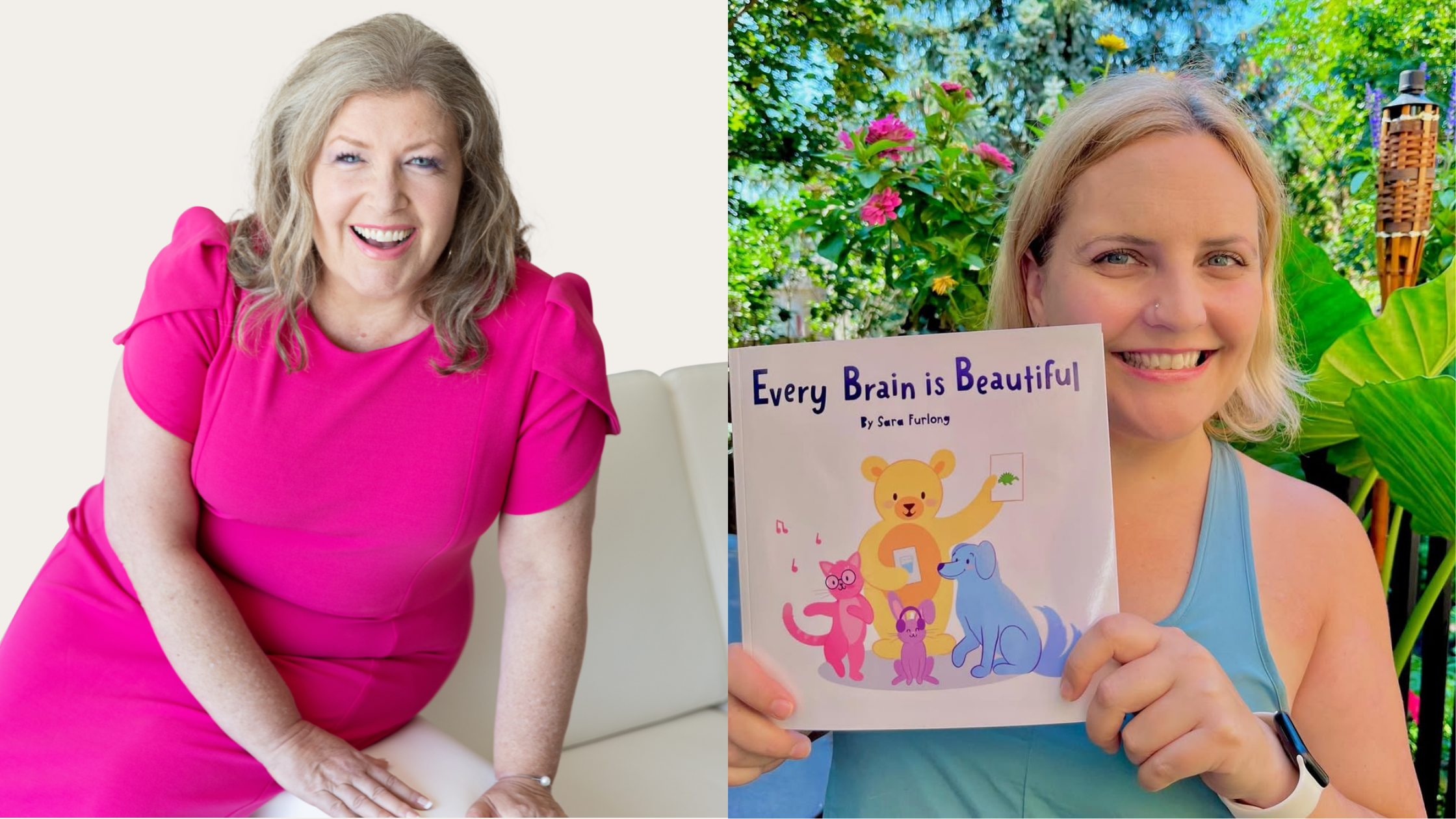

In celebration of Literacy Month, we sat down with two children's authors: Charmaine Hammond, creator of the Toby the Pet Therapy Dog series, and Sara Furlong, the neurodivergent author and mom behind WhirlyGig Creative Agency. Their books look different on the surface, but their beliefs about what children learn and need from stories are very similar.
Our Conversation with Charmaine Hammond and Sara Furlong
Why Representation in Children's Books Matters
As a neurodivergent mother of an autistic and dyslexic son, Sara set out to create books where kids who are often made to feel different could finally feel seen. "My hope is that the child feels seen, understood, and empowered," she says. "So often children with ADHD or those who are autistic are made to feel othered or less than. I want them to feel accepted and celebrated."
Charmaine shares that belief. "Stories that help children see themselves are a way of building confidence, a love of reading, and appreciation for literacy," she says. When a child finds a character that reflects their own experience, reading stops feeling like work.
One of the most distinctive things about Charmaine's books is how Toby (a real-life therapy dog!) does much of the emotional heavy lifting that a human character might not be able to.
Charmaine recalls a school presentation where Toby made his way through a gymnasium of 200 students to sit beside one quiet little boy. "The little boy said, 'Toby likes me! He likes me for who I am,'" she shares. "I later found out this child was often bullied and struggled to fit in. His teacher said he talked about his 'Toby moment' for a long time." For Charmaine, it highlighted that animals show acceptance in ways children can interpret through their own lens, without any pressure attached.
She describes a shy girl at another presentation who hadn't engaged much until Toby rolled a ball toward her with his nose. "Her shyness disappeared for the moment," Charmaine says. That kind of connection is exactly what she tries to capture on the page.
Why Animals Help Children Open Up
Both authors share a commitment to reaching reluctant readers, and Sara tackles this directly by matching reading level with interest level. "Reading can be intimidating for many children, especially if their interests and reading levels aren't aligned," she explains. Her books are written to be genuinely accessible without talking down to kids, so a child can read confidently and enjoy the story.
Charmaine's publisher gave her advice early on that stuck: "Be bright, be bold, and be gone." Stories for children don't need every detail spelled out. "We need to make a point and not give too much detail, so that children can use their imagination," she says. Toby's mischievous, playful personality made weaving in humour the natural choice.
Both authors agree that fun must come first. As Sara puts it: "If a book isn't entertaining and a child isn't excited to read it, the message won't get through. I always want to lead with fun."
Writing for the Child Who Doesn’t Love Reading
Making Reading a Habit at Home
When it comes to practical advice for families, both authors offer simple, genuinely doable ideas.
Sara suggests pairing books with moments kids already love. "Snuggling at bedtime, sitting in a sunny backyard, on the couch with grandma and grandpa – adding a storybook into an already great moment creates a positive association with books from a young age."
Charmaine recommends using stories as a springboard for conversation. Her books include discussion questions at the back, designed for dinner tables and car rides. She encourages parents to ask things like: "Have you ever felt like Toby did in the book?" or "How do you show you're a good friend?" It turns reading time into connection time.
We asked both authors what kinds of stories are still missing from children's shelves.
Charmaine points to books that build emotional intelligence and help children cope with real aspects of life: "Books that teach character skills are important. They tap into a child's imagination and build emotional intelligence in ways that stay with them."
Sara sees two gaps: "We still need stories from diverse perspectives to help broaden a child's world view, as well as new and magical stories that inspire kids to keep dreaming and exploring."
At Kidzsmart, we believe that every child deserves to see themselves reflected in a story. If you'd like to learn more about how Kidzsmart supports children’s literacy and early childhood development, we'd love to hear from you.
The Stories We Still Need

Related Blog Posts
Sports teams have been under pressure to innovate, rethink and retool when it comes to approaching the family market. Now more than ever it’s important to make kids feel like a valued part of the team!

Kidzsmart’s experience with the hospitality sector demonstrates a 20-year commitment to creating high-quality edutainment style family outreach programs for restaurants.

Check out the first episode of Let’s Get Kidzsmart, we talk to Corrie-Locke Hardy from The Tiny Activist about culture, identity, and diversity in children’s books.

See how Kidzsmart can help you
Ready to shape young minds? Let Kidzsmart help you create data-driven edutainment experiences with impact.